
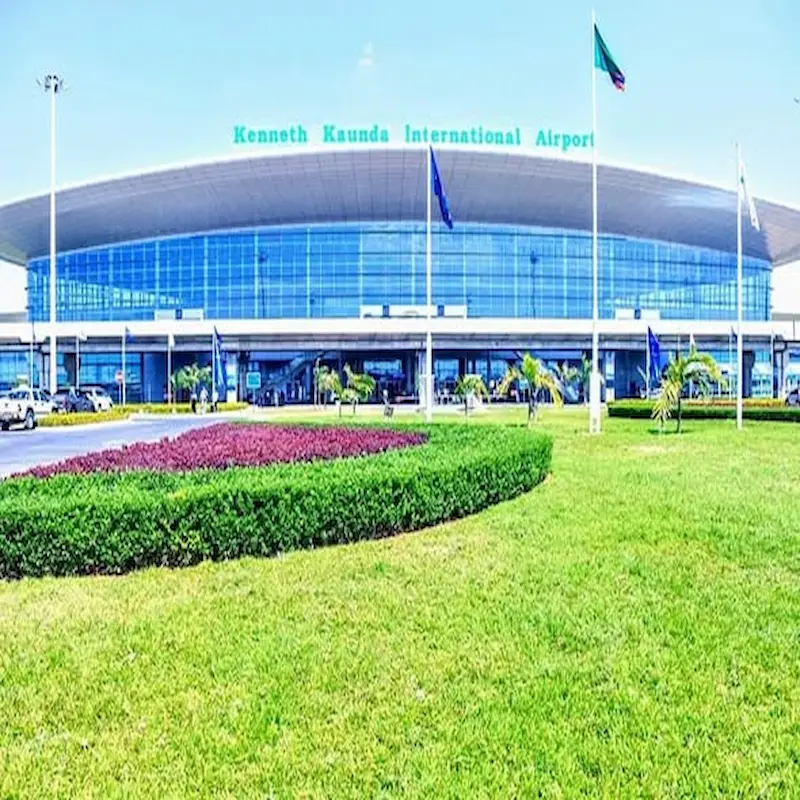
Kenneth Kaunda International Airport (KKIA) isn't just Zambia's largest airport—it's the central nervous system of the country's aviation ecosystem. Every international flight, major cargo shipment, and private jet charter flows through this facility 15 kilometers northeast of Lusaka's city center. Understanding KKIA's capabilities, limitations, and ongoing development is essential for anyone engaged in Zambian aviation or business operations.
Overview and Capacity
IATA Code: LUN
ICAO Code: FLLS
Elevation: 1,154 meters (3,779 feet) above sea level
Runway: 3,657 meters (12,000 feet) — capable of handling wide-body aircraft including B747 and A330
Annual Capacity: Designed for 6 million passengers annually, currently handling approximately 1.8-2.2 million (2024 estimates).
The airport operates 24/7 with full ILS (Instrument Landing System) capability, critical for operations during Zambia's November-March rainy season when visibility can deteriorate rapidly.
Terminal Facilities
International Terminal
The main terminal underwent a $360 million modernization completed in 2015, transforming KKIA from a tired regional facility into a modern international gateway. Features include:
- 16 check-in counters with self-service kiosks
- 5 boarding gates with jet bridges
- Modern security screening meeting international standards
- Immigration processing with e-gates for Zambian passport holders
- Duty-free shopping (modest compared to major hubs, but improving)
- VIP lounges operated by airlines and independent providers
Passenger experience: Generally efficient during off-peak hours, but arrives early during peak times (early morning and evening when multiple regional flights converge). Immigration can be slow for arriving passengers, with waits exceeding 45 minutes during peak arrivals.
Domestic Terminal
A separate facility handling regional and domestic flights, though the distinction has blurred as the main terminal also processes domestic traffic.
Key domestic routes:
- Lusaka-Ndola (Copperbelt)
- Lusaka-Livingstone (Victoria Falls)
- Lusaka-Mfuwe (South Luangwa)
- Lusaka-Lower Zambezi
Airlines and Connectivity
International Carriers
Long-haul:
- Ethiopian Airlines (Addis Ababa hub, onward connections to Asia, Europe, Americas)
- Kenya Airways (Nairobi hub)
- South African Airways / Airlink (Johannesburg hub)
- Emirates (Dubai hub) — premium option for European and Asian connections
Regional:
- Proflight Zambia (regional workhorse serving SADC countries)
- Fastjet (budget regional carrier)
- Malawian Airlines
- RwandAir
Connectivity reality: There are no direct flights from Lusaka to Europe or North America. All long-haul travel requires connecting through Addis Ababa, Johannesburg, Nairobi, or Dubai. Ethiopian Airlines typically offers the most competitive fares and frequencies.
Cargo Operations
KKIA serves as Southern Africa's fourth-largest cargo hub (after Johannesburg, Nairobi, and Addis Ababa), handling approximately 25,000 metric tons annually.
Major Cargo Services
Dedicated freighters:
- DHL Africa
- Astral Aviation
- Multiple charter operators
Primary cargo:
- Export: Copper products, gemstones (emeralds), flowers, vegetables (reaching European markets in 24-36 hours)
- Import: Mining equipment, medical supplies, technology, consumer goods
Cargo infrastructure: Modern cold storage facilities essential for flower and vegetable exports. The cargo terminal operates 24/7 with customs clearance available around the clock—critical for time-sensitive mining equipment imports.
Challenge: Cargo capacity often exceeds passenger capacity utilization, meaning securing cargo space during peak agricultural export seasons (July-September for roses, November-January for vegetables) requires advance booking.
General Aviation and Private Charters
KKIA hosts a substantial general aviation sector serving:
Executive / VIP Travel
Private jet charters operate from dedicated FBO (Fixed Base Operator) facilities away from the main terminal:
- Proflight Aviation: Primary FBO with hangar facilities
- Executive Turbine Support: Maintenance and handling
- Multiple international operators: Access to global fleet of jets
Popular routes:
- Lusaka-Johannesburg (90 minutes vs 6-8 hours commercial with connections)
- Lusaka-Dar es Salaam
- Lusaka-Lubumbashi (DRC mining corridor)
- Lusaka-regional mine sites
Advantages: Dedicated VIP terminal, fast-track immigration and customs, direct tarmac access, flexible scheduling.
Medical Evacuations
KKIA serves as the primary hub for air ambulance operations across Southern Africa:
- AMREF Flying Doctors
- Multiple private medevac providers
Critical for mine site emergencies and tourist medical evacuations from remote parks.
Supporting the Drone Industry
KKIA's airspace management directly impacts commercial drone operations in Lusaka:
Restrictions
- 10km control zone around the airport where drone operations are prohibited without special authorization
- Altitude limitations in surrounding areas (maximum 50 meters within 15km radius)
- NOTAM requirements for any operations in controlled airspace
Reality: The restriction zone encompasses much of central Lusaka, limiting urban drone applications. Companies requiring Lusaka drone operations typically work from locations 15+ kilometers from the airport.
Coordination
ZCAA maintains an office at KKIA coordinating with air traffic control for approved drone operations. For large-scale projects requiring temporary airspace access, coordination is possible but requires:
- 30 days advance notice minimum
- Comprehensive risk assessment
- Real-time communication capabilities with ATC
- Restricted to specific time windows (usually early morning)
Ongoing Development
Expansion Projects
Phase 1 (Completed 2015):
- Terminal modernization
- New international arrivals hall
- Enhanced security systems
Phase 2 (In progress / planned):
- Second runway (planned to handle 2 million additional passengers)
- Expanded cargo facilities
- Additional aircraft parking stands
- Hotel development on airport land
Timeline: Second runway environmental impact assessments ongoing; construction start date uncertain (likely 2026-2028).
Technology Upgrades
- Biometric immigration: Rolling out for Zambian citizens and select visa-exempt countries
- Baggage handling automation: Reducing lost luggage incidents
- Free WiFi expansion: Currently available but bandwidth-limited during peak hours
Challenges and Limitations
Infrastructure Strain
During peak hours (6:00-9:00 AM, 4:00-7:00 PM), the airport operates near capacity:
- Check-in congestion: Especially for regional flights
- Immigration bottlenecks: Limited staff during arrivals surges
- Apron space limitations: Aircraft parking constraints during peak times
Weather Impacts
Lusaka's altitude (1,154m) and seasonal weather create operational challenges:
- November-March rainy season: Thunderstorms cause delays and diversions
- Hot temperatures: Affect aircraft performance, particularly during October (hot season)
- Harmattan haze (June-August): Reduced visibility from distant Sahara dust
Ground Services Quality
Variable across providers:
- Fuel quality: Generally good, but always verify for private aircraft
- Handling services: Professionalism varies; international standards not always met
- Maintenance facilities: Limited heavy maintenance capability; major work requires ferrying aircraft to Johannesburg or Nairobi
Practical Tips for Business Aviation Users
Arrive Early
- International flights: 3 hours before departure
- Regional flights: 2 hours before departure
- Peak times add 30-60 minutes
VIP Services
- Pre-arrange meet-and-greet services for important visitors
- VIP lounges offer respite from crowded public areas
- Fast-track immigration worth the cost for time-sensitive travelers
Ground Transportation
- Pre-arrange airport transfers; taxi quality varies
- Expect 30-45 minute drive to city center in normal traffic
- Peak hour (7:30-9:00 AM, 5:00-7:00 PM) can extend to 90 minutes
Parking
- Short-term: K20/hour
- Long-term: K80-K120/day
- Security generally good but remove valuables
The Bottom Line
Kenneth Kaunda International Airport is a functional, steadily improving gateway that serves Zambia's aviation needs adequately if not spectacularly. It handles the fundamentals—safety, connectivity, cargo throughput—reliably. Passenger experience lags behind leading African airports (Kigali, Addis Ababa, Cape Town) but exceeds many regional competitors.
For businesses, KKIA's cargo efficiency and general aviation facilities provide the infrastructure needed for operations. For private operators and drone companies, understanding the airspace restrictions and coordination requirements prevents operational surprises.
The airport is growing with the economy. As mining investment increases and tourism rebounds, KKIA will continue expanding to meet demand. It's not Dubai or Singapore, but it's a solid, safe, improving facility that connects Zambia to the world—and that's what matters.